SodaMelt Official Website › Blog › How Long To Take A Stimulant Laxative
How Long Is A Stimulant Laxative Meant To Be Taken?
Every over-the-counter product in this ingredient class prints a limit in days. A dietary supplement containing the same compounds usually prints nothing at all. That gap is regulatory rather than pharmacological, and it is the most useful thing to understand before buying six bottles of anything.
- Anthranoid stimulant laxatives are the one family on this panel whose working dose fits inside a capsule.
- Drug labelling in this class prints a duration limit. Supplement labelling is not required to, and this carton does not.
- The long-running literature describes adaptation and a benign, reversible pigmentation rather than structural damage.
- The older cathartic colon story was overstated, and correcting it is not the same as saying indefinite use is fine.
- A short course is the sensible reading, which makes the pack you buy a decision rather than a discount.
Why duration is the question nobody prints
A dietary supplement carton in the United States carries a standard set of elements: the panel, the suggested use, a storage line, a caution paragraph and the federal statement. Nothing in that set is a duration limit, and nothing requires one.
A drug carton carries a different set, written to a different rule, and for a stimulant laxative that set includes how many consecutive days the product is meant for.
So two boxes can contain compounds from the same plant family and print completely different guidance, because they are regulated as different things. On this carton the suggested use reads: As a dietary supplement, take one (1) capsule daily with an 8 oz. glass of water. For best results, take 20-30 minutes before a meal with 8 oz of water or as directed by your healthcare professional. Nothing follows it about how long.
Why the gap persists
There is no villain in this. A manufacturer printing a duration limit on a supplement would be volunteering a restriction nobody asked for, and a restriction printed on one carton and not on the nine beside it reads as a warning about that product rather than about the class.
The result is a shelf where the most useful single line is missing from every product on it, and where the buyer is left to infer it from the ingredient names. Inferring it is what the rest of this article does.
What the over-the-counter shelf says about itself
| Product type | Does it print a duration limit | What it typically says |
|---|---|---|
| Over-the-counter senna tablet | Yes | Do not use for more than one week unless directed |
| Over-the-counter bisacodyl | Yes | Short-term use, with a stated limit in days |
| Pharmacy own-brand anthranoid | Yes | A limit in days, printed on the carton |
| A supplement containing the same compounds | Usually not | A general caution, a storage line and a dose |
| SodaMelt | No | One capsule daily, with water, before a meal. No limit stated anywhere on the carton |
Five rows. The first three are drugs and carry drug labelling; the last two are dietary supplements and do not, which is a regulatory difference rather than a pharmacological one.
The pattern in that table is worth sitting with. Where a regulator required somebody to think about duration, duration got printed. Where nobody required it, it did not.
That is not an accusation against this manufacturer. It is a description of two labelling regimes, and the practical upshot is that the buyer has to supply the missing line themselves.
What the mechanism predicts about repeated use
An anthranoid glycoside travels to the colon largely unchanged. Bacteria there cleave the sugar off, and the freed compound reduces water reabsorption and increases propulsive contractions (a review of anthranoid laxatives, a review of chronic stimulant laxative use).
Two things follow. The effect is delayed by six to twelve hours, because the bacterial step has to happen first. And its strength varies between people, because gut flora vary between people.
For duration, the relevant prediction is about a system being pushed repeatedly. A colon stimulated every day for months is not doing what it would do unaided, and the question the literature asks is what happens when the stimulus is withdrawn.
What long-running use is actually associated with
| The claim you will have read | What the literature actually supports |
|---|---|
| Anthranoid laxatives damage the nerves of the bowel | The older cathartic colon idea has been substantially revised; the evidence for structural nerve damage in people is weak |
| They cause a permanently lazy bowel | What is described is adaptation rather than destruction, and it is reported to settle after stopping |
| They stain the bowel lining | Melanosis coli is real, it is benign, and it reverses after the laxative is stopped |
| They are unsafe at any duration | Short courses are the ordinary use of this whole class, and the OTC shelf is built around them |
| They are entirely harmless indefinitely | Nobody establishes that either, which is why every product in the class that carries drug labelling prints a limit |
Five statements, two of them exaggerations in one direction and one an exaggeration in the other. The honest position sits between them.
The revision of the cathartic colon story is genuinely important and it is often reported badly. Reviews of prolonged anthranoid use have pushed back on the idea that these compounds destroy the nerve supply of the bowel (a review of the cathartic colon question, a review of long-term stimulant laxative use), and that pushback is well founded.
What it does not license is the opposite conclusion. Reviews of the effects on the gut describe changes with prolonged use that are worth avoiding (a prospective colonoscopy study), and the absence of proof of severe harm is not evidence of indefinite safety.
The honest reading is the boring one. Short courses are ordinary, well tolerated and what this whole family is built for. Months of daily use is a different proposition and nobody has established that it is a good idea.
Buy one SodaMelt bottle before buying six
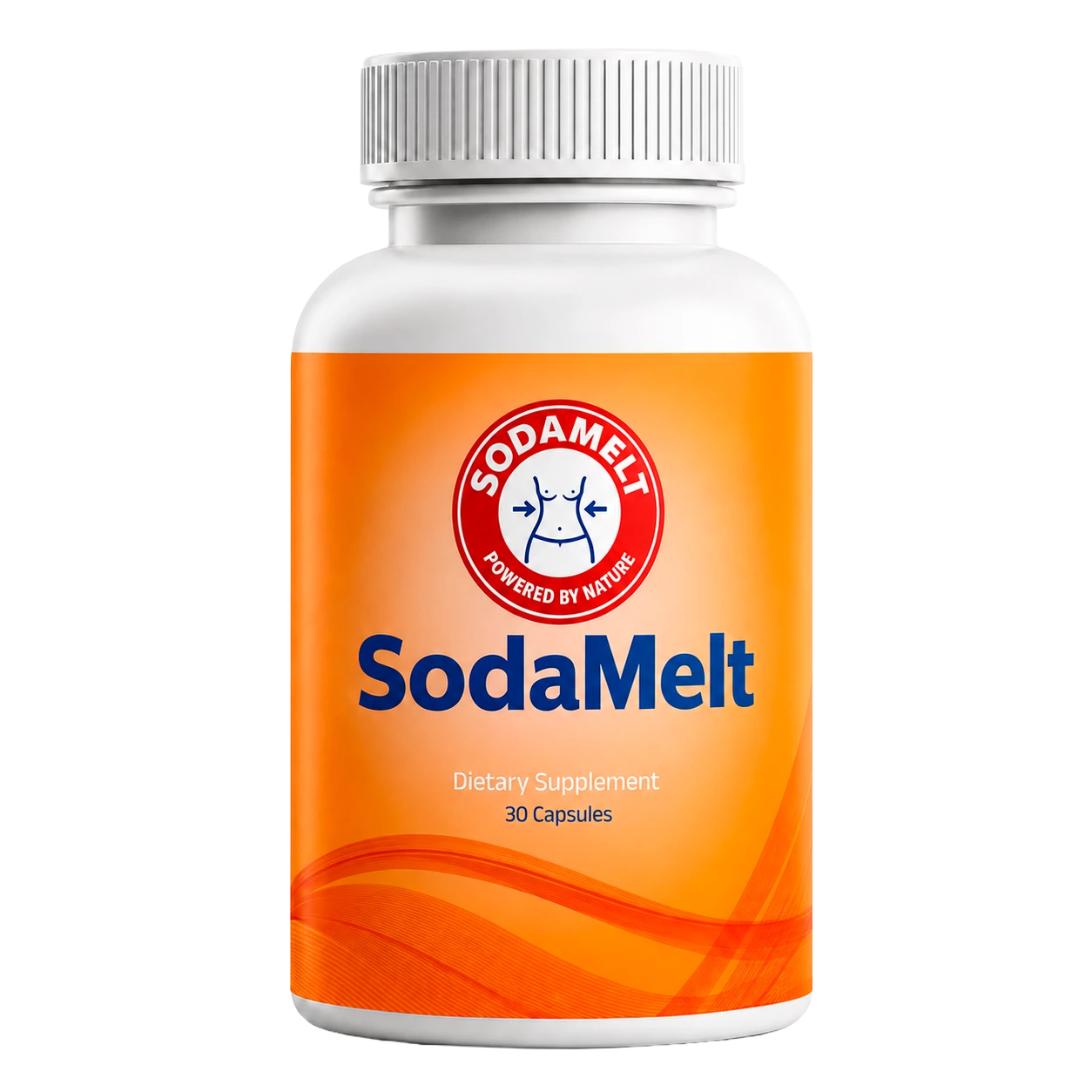
Thirty capsules is a complete answer and it finishes on day thirty, well inside a window that runs 60 days from the purchase date.
One bottle $89 · six bottles $294 · 60-day money-back guarantee
Order SodaMelt On The Official WebsiteOne capsule a day · 30 per bottle · lot SOD-26/MY-2226
Melanosis coli, and what it is and is not
Melanosis coli is a brown pigmentation of the colonic lining, visible at colonoscopy, and it is strongly associated with prolonged anthranoid laxative use (a study of melanosis coli at colonoscopy).
Three things are worth knowing about it. It is benign. It reverses after the laxative is stopped. And it is an excellent marker of exactly the thing this article is about, because it does not appear after a week.
It is sometimes reported as though it were a disease. It is better understood as a visible record of how long somebody has been taking something, which is why a gastroenterologist finding it asks about laxatives.
Not to alarm anybody. A person who takes a short course of this capsule will never encounter it. It is named because it is the clearest evidence in the literature that duration is a real variable in this class, rather than a formality.
What a short course looks like in practice
There is no official definition and this desk is not inventing one. What follows is how the reasoning above cashes out for somebody holding a bottle.
- Fix the hour. An evening capsule lands the following morning, which is easier to plan around than the reverse.
- Take the full glass of water the label asks for, because two of the eleven blend members take up water readily.
- Judge it by the end of the first week. This family declares itself in days, not in weeks.
- Run a bottle if it suits you, then stop and see what happens without it. That is the only way to learn anything about your own baseline.
- Treat a second bottle as a new decision rather than a continuation, and give the question the same attention you gave the first one.
That sequence fits inside the 60-day window twice over, which is the practical argument for it. It also matches what the seller's own review summary records: the named roster wrote at around day 40 on average, and the single reviewer who stopped did so at day 29.
The six-bottle problem
The seller's best price is $49 a bottle on the six-bottle tier. Six bottles is 180 capsules, which at one a day is six consecutive months.
Set that beside everything above and the tension is obvious. The tier with the best unit price commits a buyer to six months of a formula whose working family is one the over-the-counter shelf limits to days at a time.
There is a sensible way to buy it anyway, which is to treat six bottles as stock rather than as a schedule. Three short courses across a year is a different thing from 180 consecutive capsules, and the bottles keep: the label asks only for a cool, dry place away from heat and light.
What is not sensible is buying six because the arithmetic per bottle looks best and then working through them because they are there. That is the decision this article exists to make deliberate.
There is a second consequence that follows from the same arithmetic and is easier to miss. A buyer who intends to use six bottles as stock across a year will reach the end of the 60-day window with most of the order sealed and unreturnable. If there is any doubt at all about whether this capsule suits you, that doubt should be resolved on one bottle first, and the second purchase made afterwards at whatever price the ladder is offering then.
References
- van Gorkom BA, de Vries EG, Karrenbeld A, et al. Review article: anthranoid laxatives and their potential carcinogenic effects. Aliment Pharmacol Ther. 1999;13(4):443-52. PMID 10215727. https://pubmed.ncbi.nlm.nih.gov/10215727/
- Noergaard M, Traerup Andersen J, Jimenez-Solem E, et al. Long term treatment with stimulant laxatives - clinical evidence for effectiveness and safety? Scand J Gastroenterol. 2019;54(1):27-34. PMID 30700194. https://pubmed.ncbi.nlm.nih.gov/30700194/
- Morales MA, Hernández D, Bustamante S, et al. Is senna laxative use associated to cathartic colon, genotoxicity, or carcinogenicity? J Toxicol. 2009;2009:287247. PMID 20107583. https://pubmed.ncbi.nlm.nih.gov/20107583/
- Katsumata R, Manabe N, Monobe Y, et al. Severe grade of melanosis coli is associated with a higher detection rate of colorectal adenoma. J Clin Biochem Nutr. 2022;71(2):165-171. PMID 36213792. https://pubmed.ncbi.nlm.nih.gov/36213792/
- Siegers CP, von Hertzberg-Lottin E, Otte M, et al. Anthranoid laxative abuse - a risk for colorectal cancer? Gut. 1993;34(8):1099-101. PMID 8174962. https://pubmed.ncbi.nlm.nih.gov/8174962/
- Wald A. Is chronic use of stimulant laxatives harmful to the colon? J Clin Gastroenterol. 2003;36(5):386-9. PMID 12702977. https://pubmed.ncbi.nlm.nih.gov/12702977/