SodaMelt Official Website › Digestion Supplement Guide
Digestion Supplement GuideDigestion Supplement Guide: Six Families, Six Different Scales
Almost every argument about a digestion supplement dissolves once the scale is on the table. Bulk fibres work in grams. Osmotics work in grams. Stimulant anthranoids work in tens of milligrams. Cultures are counted in billions of organisms. Bitters and adsorbents have pharmacology but no outcome trials. A label that mixes families without naming amounts is unreadable until you know which scale each row belongs to.
Six families, the amount each one’s human trials actually used, and how to tell from a panel which of them a capsule can reach.
The scale table, which is the whole guide in one place
Six families and the amount each one’s human work actually used.
| Family | Examples | What the human work used | Scale |
|---|---|---|---|
| Bulk-forming fibre | Psyllium husk, methylcellulose, inulin | More than 10 g a day for constipation (a 2022 meta-analysis of fibre supplementation); 10.2 g a day in the lipid work (a meta-analysis of eight controlled trials) | Grams |
| Osmotic | Polyethylene glycol, lactulose, magnesium salts | Grams a day, and compared head to head with psyllium in trials (a randomised comparison with polyethylene glycol, a general-practice comparison with lactulose) | Grams |
| Stimulant anthranoid | Senna, cascara sagrada, Chinese rhubarb, aloe latex, buckthorn | Tens of milligrams of anthranoid glycoside (a review of anthranoid laxatives, a survey of anthraquinones in laxative plants) | Tens of milligrams |
| Live culture | Lactobacillus and Bifidobacterium species | 3 to 8 billion CFU a day in the trials with results behind them (a randomised trial of probiotic sachets, a controlled study using L. acidophilus NCFM) | Billions of organisms |
| Bitter and aromatic | Gentian, ginger, artichoke | Pharmacology and review literature rather than randomised outcome trials (a review of Gentianae Radix, a review of gentiopicroside) | Not established in people |
| Adsorbent | Bentonite clay, activated charcoal | Studied as an excipient and an adsorbent rather than as a benefit (a review of bentonite in drug delivery) | Not a benefit claim |
Six families. The third column is what the published work used, not a recommendation, and not a prediction about any particular bottle.
Read down the right-hand column and the arithmetic of this aisle becomes obvious. A capsule holding a few hundred milligrams of powder can reach the third family and cannot reach the first two, whatever it prints on the front.
That is not a criticism of capsules. It is a statement about volume: a gram of psyllium is roughly the contents of two large capsules, and the trials asked for ten.
A family with no established scale is treated carefully in both directions here. Nobody has settled what it does in people, so a label promising a result from one is promising beyond the literature.
Bulk-forming fibre, and why it needs so much
One mechanism, and the reason it sets its own minimum dose.
Psyllium is the best-studied member of the family and the mechanism explains the scale. The husk takes up water and forms a gel, and the gel adds mass and softness to stool. Both of those are physical properties of a quantity of material (a review of how functional fibres actually work).
A mechanism that works by bulk cannot work at a weight too small to be bulk. The updated meta-analysis of fibre supplementation in chronic constipation found the benefit at more than 10 g a day (a 2022 meta-analysis of fibre supplementation), a dose-response review sets out how the effect grows with the amount (a dose-response meta-analysis), and the cholesterol work landed at 10.2 g a day (a meta-analysis of eight controlled trials).
Two further points are worth carrying. Fibre changes the gut microbial community as well as the stool (a controlled study of psyllium husk), and head-to-head trials against osmotics put psyllium in the same conversation as prescription options rather than beneath them (a randomised comparison with polyethylene glycol, a general-practice comparison with lactulose).
- A fibre row in a capsule is almost always a gesture rather than a dose
- A fibre product that works is usually a powder in a scoop, and it says so
- Water is part of the mechanism, so a fibre taken without enough of it can make things worse rather than better
- Fibre from food does the same job, and diet is where most of this belongs (a 2024 meta-analysis of foods, drinks and diets)
So one question settles a fibre row: is the amount measured in grams.
Stimulant anthranoids, the family that fits in a capsule
The one family whose working dose fits inside a capsule, and what that costs.
Anthranoids are the plant compounds behind senna, cascara sagrada, Chinese rhubarb, the latex of the aloe leaf and buckthorn bark. They reach the colon largely unchanged, bacteria there cleave the sugar off, and the freed compound reduces water reabsorption and increases propulsive contractions (a review of anthranoid laxatives, a review of chronic stimulant laxative use).
Two consequences follow from that bacterial step. The effect arrives six to twelve hours later rather than immediately, and its strength varies between people because gut flora vary.
The scale is the reason this family turns up in capsules. Anthranoid glycosides are active in tens of milligrams, so a few hundred milligrams of plant material is enough to matter (a survey of anthraquinones in laxative plants, a toxicity assessment of buckthorn bark and emodin). Nothing else on this shelf works at that weight.
- What they do when they work: looser stool, urgency, and cramping. Those are the mechanism rather than side effects, which is the single most useful thing to know before taking one.
- Duration: every over-the-counter product in this class prints a limit on consecutive days. A supplement containing the same compounds often does not.
- Long-running use: the literature describes melanosis coli, a benign pigmentation of the colonic lining that reverses after stopping (a study of melanosis coli at colonoscopy, a prospective colonoscopy study), and a bowel that has adapted to stimulation (a review of the cathartic colon question, a review of long-term stimulant laxative use).
- The rarer signals: a case report of hepatitis associated with a cascara supplement (a case report of cascara sagrada liver injury), colonic changes in rats given cascara (a rat-colon assay of senna and cascara glycosides), and cytotoxicity work on the compound class (a structure-activity comparison of anthranoids).
Aloe deserves separating out, because the word covers two completely different materials. The inner gel is the one sold as a drink and the one with the negative and mixed irritable bowel trials behind it (a placebo-controlled trial that found no benefit, a randomised trial of an aloe extract, a systematic review of aloe in IBS, a placebo-controlled pilot study). The latex just under the leaf skin is the anthranoid, it is the reason the whole-leaf material is a laxative, and it is what the rodent toxicology programme examined (the National Toxicology Program's rat study, the full NTP technical report, a review of aloe toxicity, NCCIH).
A label saying only aloe vera leaf has not told you which. A label saying aloe vera gel, or naming a decolourised extract, has.
Live cultures, and the number that has to be printed
Three things a culture row has to print before it can be assessed at all.
A probiotic row is the easiest thing on any panel to check, because the unit is unambiguous. Colony-forming units, printed as a figure, at a stated strain.
Trials with results behind them used 3 to 8 billion CFU a day (a randomised trial of probiotic sachets), and the better studies name the strain rather than the species, because strains within a species behave differently (a controlled study using L. acidophilus NCFM, a double-blind trial of a named L. acidophilus strain). Work in older adults is a reasonable illustration of how specific the questions get (a randomised trial in older adults).
So a culture named without a count is not a small omission. Without a figure the amount is unknowable, and a culture inside a proprietary blend is unknowable twice over.
Look for three things: the genus, the strain designation and the CFU count, plus the date the count is guaranteed to. Two out of three is common. Three out of three is the mark of a manufacturer that expects to be read.
The two families with pharmacology but no outcome trials
Two families with real chemistry and no outcome trials, and a third kind of gap.
Bitters are the older tradition on this shelf. Gentian is the type specimen, its chemistry is well described and its principal compound has a substantial pharmacological literature (a review of Gentianae Radix, a review of gentiopicroside). What is hard to find is a randomised human trial of an outcome anybody buys it for.
Adsorbents are the newer arrival. Bentonite is a clay, and the usable literature treats it as a pharmaceutical excipient and an adsorbent rather than as a benefit (a review of bentonite in drug delivery). That framing matters practically rather than academically: an adsorbent can take up other things swallowed at the same time, which makes it a spacing question for anyone on a prescription.
Neither family is being dismissed here. The honest position is that their human outcome evidence does not exist yet, and a label promising a result from either is promising past what has been established.
There is a third quiet category worth naming, which is the ingredient whose evidence belongs to a different part of the plant or a different preparation. Oat is the clean example: every beta-glucan result used bran or oatmeal at 3 g of beta-glucan a day (a meta-analysis of oat beta-glucan, a systematic review of oat beta-glucan and LDL), and a label naming the straw is naming a different material. Alfalfa is another: the cholesterol work used 40 g of heat-prepared seeds three times a day (the alfalfa seed trial, an earlier study of alfalfa seeds), and the fact most relevant at supplement scale is the canavanine story rather than the lipid one (the L-canavanine finding).
What a digestion supplement can do to the rest of your medicine cabinet
Five interactions worth knowing, and the two with human evidence behind them.
| Ingredient | What it affects | The practical instruction |
|---|---|---|
| Calcium carbonate | Levothyroxine absorption | Four hours apart (the levothyroxine absorption study, a systematic review of levothyroxine interactions, a review of what interferes with thyroxine absorption) |
| Goldenseal | CYP3A4 and CYP2D6, two enzymes that clear many prescriptions | Raise it with your prescriber by name (a study of goldenseal and human cytochrome P450, the goldenseal-midazolam interaction study, a pharmacokinetic modelling study) |
| Berberine-bearing plants | Bilirubin handling in some settings | A reason to name the plant rather than the family (a study of berberine and bilirubin binding) |
| Bentonite and other adsorbents | Anything swallowed at the same time | Space it from medicines (a review of bentonite in drug delivery) |
| Bulk fibre | The absorption of some drugs taken together | Space it, and take it with enough water (a review of how functional fibres actually work) |
Five rows. The first two are the ones with human evidence specific enough to act on, and neither is usually printed on a supplement carton.
The goldenseal row is the one most often got wrong in both directions. The widely repeated claim that it inhibits P-glycoprotein was not supported by the human digoxin study (a human digoxin study that found no effect); the enzyme inhibition that IS supported is real, measured in people, and enough on its own (a 2020 study of goldenseal's individual alkaloids, NCCIH). General reviews of herb interactions exist (a systematic review of herbal drug interactions) and are no substitute for naming the plant on the label in front of you.
When a supplement is the wrong tool
Three situations, and which of them a shelf can reasonably address.
Most constipation is a matter of fluid, fibre from food, movement and routine, and reviews of the condition put diet first for good reasons (a 2024 meta-analysis of foods, drinks and diets, a 2024 Cochrane review). A capsule that bypasses all four will keep needing to be taken.
Some of it is not. Blood, fever, pain, a sudden change in habit that persists, or unexplained weight change are signals that belong in an appointment rather than in a shopping basket, and reviews aimed at recognising them exist for exactly that reason (a review of what makes a fibre supplement effective).
In between sits the ordinary case, where an over-the-counter option chosen knowingly is entirely reasonable (a systematic review of over-the-counter options). What makes it knowing is understanding which family you are buying and at what scale, which is what this guide is for.
Water, and enough of it, taken alongside whatever else you decide on. Every family above either depends on it outright or works better with it, and it is the only part of this that costs nothing.
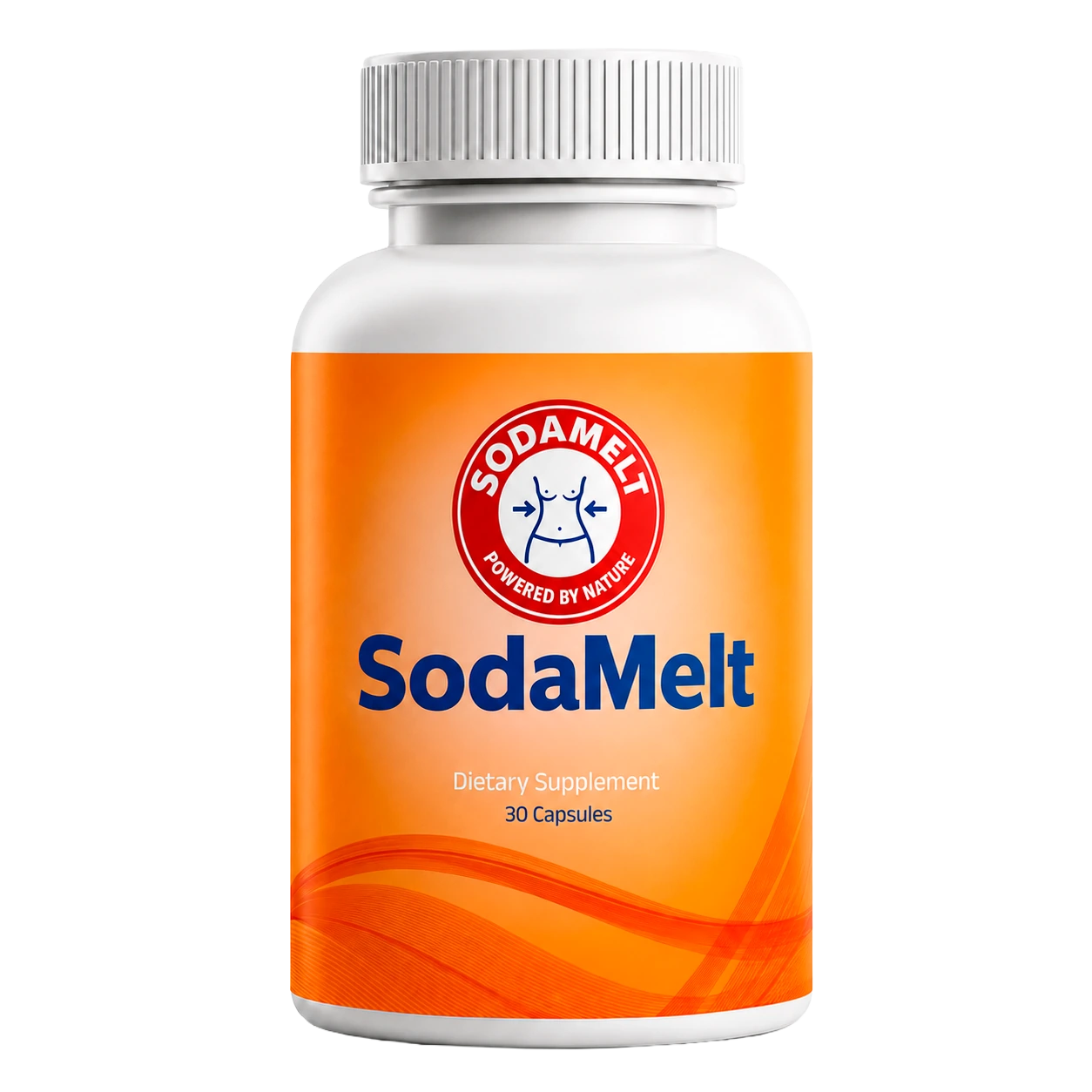
Running this guide against the bottle this website sells
Six families, one label, and the count of how many of them the weight can reach.
| Family | On the SodaMelt panel | Can the weight reach it |
|---|---|---|
| Bulk fibre | Psyllium husk, third of eleven | No. The whole blend is 250 mg and the trials used more than 10 g |
| Stimulant anthranoid | Chinese rhubarb, aloe leaf, cascara, buckthorn, at four, six, seven and nine | Yes. This family works at tens of milligrams |
| Live culture | Lactobacillus acidophilus, eleventh of eleven, no count declared | Unknowable. Without a CFU figure there is nothing to assess |
| Bitter | Scabrous gentian, fifth of eleven | No human outcome trial exists at any dose |
| Adsorbent | Bentonite, tenth of eleven | Not a benefit question. It is a spacing question |
| Other-part evidence | Oat straw first, alfalfa herb second | The beta-glucan and lipid results belong to bran and to seeds |
Six rows applied to one label. It reaches one family of the six, and that is the honest reading of what the capsule does.
A guide that never touched the product beside it would be evasive, so it is applied here and the result is what it is. One family of six.
That is not the same as saying the product does nothing. A stimulant laxative that works is a product that works, and it is a narrower thing than a twelve-ingredient panel implies.
The ingredients page runs the same analysis name by name, with the trial dose beside each label position.
Sources for this digestion supplement guide
Every dose figure above came off one of these papers. The abstracts and records were retrieved rather than recalled.
- van der Schoot A, Drysdale C, Whelan K, et al. The Effect of Fiber Supplementation on Chronic Constipation in Adults: An Updated Systematic Review and Meta-Analysis of Randomized Controlled Trials. Am J Clin Nutr. 2022;116(4):953-969. PMID 35816465. https://pubmed.ncbi.nlm.nih.gov/35816465/
- Anderson JW, Allgood LD, Lawrence A, et al. Cholesterol-lowering effects of psyllium intake adjunctive to diet therapy in men and women with hypercholesterolemia: meta-analysis of 8 controlled trials. Am J Clin Nutr. 2000;71(2):472-9. PMID 10648260. https://pubmed.ncbi.nlm.nih.gov/10648260/
- Wei ZH, Wang H, Chen XY, et al. Time- and dose-dependent effect of psyllium on serum lipids in mild-to-moderate hypercholesterolemia: a meta-analysis of controlled clinical trials. Eur J Clin Nutr. 2009;63(7):821-7. PMID 18985059. https://pubmed.ncbi.nlm.nih.gov/18985059/
- Jalanka J, Major G, Murray K, et al. The Effect of Psyllium Husk on Intestinal Microbiota in Constipated Patients and Healthy Controls. Int J Mol Sci. 2019;20(2):433. PMID 30669509. https://pubmed.ncbi.nlm.nih.gov/30669509/
- Wang HJ, Liang XM, Yu ZL, et al. A randomised, controlled comparison of low-dose polyethylene glycol 3350 plus electrolytes with ispaghula husk in the treatment of adults with chronic functional constipation. Drugs R D. 2005;6(4):221-5. PMID 15991881. https://pubmed.ncbi.nlm.nih.gov/15991881/
- Dettmar PW, Sykes J. A multi-centre, general practice comparison of ispaghula husk with lactulose and other laxatives in the treatment of simple constipation. Curr Med Res Opin. 1998;14(4):227-33. PMID 9891195. https://pubmed.ncbi.nlm.nih.gov/9891195/
- McRorie JW Jr, McKeown NM. Understanding the Physics of Functional Fibers in the Gastrointestinal Tract: An Evidence-Based Approach to Resolving Enduring Misconceptions about Insoluble and Soluble Fiber. J Acad Nutr Diet. 2017;117(2):251-264. PMID 27863994. https://pubmed.ncbi.nlm.nih.gov/27863994/
- Lambeau KV, McRorie JW Jr. Fiber supplements and clinically proven health benefits: How to recognize and recommend an effective fiber therapy. J Am Assoc Nurse Pract. 2017;29(4):216-223. PMID 28252255. https://pubmed.ncbi.nlm.nih.gov/28252255/
- Rao SSC, Brenner DM. Efficacy and Safety of Over-the-Counter Therapies for Chronic Constipation: An Updated Systematic Review. Am J Gastroenterol. 2021;116(6):1156-1181. PMID 33767108. https://pubmed.ncbi.nlm.nih.gov/33767108/
- Van Der Schoot A, Katsirma Z, Whelan K, et al. Systematic review and meta-analysis: Foods, drinks and diets and their effect on chronic constipation in adults. Aliment Pharmacol Ther. 2024;59(2):157-174. PMID 37905980. https://pubmed.ncbi.nlm.nih.gov/37905980/
- Todd CL, Johnson EE, Stewart F, et al. Conservative, physical and surgical interventions for managing faecal incontinence and constipation in adults with central neurological diseases. Cochrane Database Syst Rev. 2024;10(10):CD002115. PMID 39470206. https://pubmed.ncbi.nlm.nih.gov/39470206/
- van Gorkom BA, de Vries EG, Karrenbeld A, et al. Review article: anthranoid laxatives and their potential carcinogenic effects. Aliment Pharmacol Ther. 1999;13(4):443-52. PMID 10215727. https://pubmed.ncbi.nlm.nih.gov/10215727/
- Siegers CP, von Hertzberg-Lottin E, Otte M, et al. Anthranoid laxative abuse - a risk for colorectal cancer? Gut. 1993;34(8):1099-101. PMID 8174962. https://pubmed.ncbi.nlm.nih.gov/8174962/
- Wald A. Is chronic use of stimulant laxatives harmful to the colon? J Clin Gastroenterol. 2003;36(5):386-9. PMID 12702977. https://pubmed.ncbi.nlm.nih.gov/12702977/
- Morales MA, Hernández D, Bustamante S, et al. Is senna laxative use associated to cathartic colon, genotoxicity, or carcinogenicity? J Toxicol. 2009;2009:287247. PMID 20107583. https://pubmed.ncbi.nlm.nih.gov/20107583/
- Noergaard M, Traerup Andersen J, Jimenez-Solem E, et al. Long term treatment with stimulant laxatives - clinical evidence for effectiveness and safety? Scand J Gastroenterol. 2019;54(1):27-34. PMID 30700194. https://pubmed.ncbi.nlm.nih.gov/30700194/
- Nadir A, Reddy D, Van Thiel DH. Cascara sagrada-induced intrahepatic cholestasis causing portal hypertension: case report and review of herbal hepatotoxicity. Am J Gastroenterol. 2000;95(12):3634-7. PMID 11151906. https://pubmed.ncbi.nlm.nih.gov/11151906/
- Mereto E, Ghia M, Brambilla G. Evaluation of the potential carcinogenic activity of Senna and Cascara glycosides for the rat colon. Cancer Lett. 1996;101(1):79-83. PMID 8625286. https://pubmed.ncbi.nlm.nih.gov/8625286/
- Demarque DP, Silva RMP, Santos LF, et al. Cytotoxicity of Structurally Diverse Anthranoids and Correlation with Mechanism of Action and Side Effects. J Pharm Pharm Sci. 2018;21(1):347-353. PMID 30321134. https://pubmed.ncbi.nlm.nih.gov/30321134/
- van Os FH. Anthraquinone derivatives in vegetable laxatives. Pharmacology. 1976;14 Suppl 1:7-17. PMID 790407. https://pubmed.ncbi.nlm.nih.gov/790407/
- Brkanac SR, Gerić M, Gajski G, et al. Toxicity and antioxidant capacity of Frangula alnus Mill. bark and its active component emodin. Regul Toxicol Pharmacol. 2015;73(3):923-9. PMID 26399165. https://pubmed.ncbi.nlm.nih.gov/26399165/
- Katsumata R, Manabe N, Monobe Y, et al. Severe grade of melanosis coli is associated with a higher detection rate of colorectal adenoma. J Clin Biochem Nutr. 2022;71(2):165-171. PMID 36213792. https://pubmed.ncbi.nlm.nih.gov/36213792/
- Boudreau MD, Mellick PW, Olson GR, et al. Clear evidence of carcinogenic activity by a whole-leaf extract of Aloe barbadensis miller (aloe vera) in F344/N rats. Toxicol Sci. 2013;131(1):26-39. PMID 22968693. https://pubmed.ncbi.nlm.nih.gov/22968693/
- Boudreau MD, Beland FA, Nichols JA, et al. Toxicology and carcinogenesis studies of a nondecolorized whole leaf extract of Aloe barbadensis Miller (Aloe vera) in F344/N rats and B6C3F1 mice (drinking water study). Natl Toxicol Program Tech Rep Ser. 2013;(577):1-266. PMID 24042237. https://pubmed.ncbi.nlm.nih.gov/24042237/
- Guo X, Mei N. Aloe vera: A review of toxicity and adverse clinical effects. J Environ Sci Health C Environ Carcinog Ecotoxicol Rev. 2016;34(2):77-96. PMID 26986231. https://pubmed.ncbi.nlm.nih.gov/26986231/
- Davis K, Philpott S, Kumar D, et al. Randomised double-blind placebo-controlled trial of aloe vera for irritable bowel syndrome. Int J Clin Pract. 2006;60(9):1080-6. PMID 16749917. https://pubmed.ncbi.nlm.nih.gov/16749917/
- Ahluwalia B, Magnusson MK, Böhn L, et al. Randomized clinical trial: Effects of Aloe barbadensis Mill. extract on symptoms, fecal microbiota and fecal metabolite profiles in patients with irritable bowel syndrome. Neurogastroenterol Motil. 2020;32(8):e13860. PMID 32314514. https://pubmed.ncbi.nlm.nih.gov/32314514/
- Hong SW, Chun J, Park S, et al. Aloe vera Is Effective and Safe in Short-term Treatment of Irritable Bowel Syndrome: A Systematic Review and Meta-analysis. J Neurogastroenterol Motil. 2018;24(4):528-535. PMID 30153721. https://pubmed.ncbi.nlm.nih.gov/30153721/
- Störsrud S, Pontén I, Simrén M. A Pilot Study of the Effect of Aloe barbadensis Mill. Extract (AVH200) in Patients with Irritable Bowel Syndrome: a Randomized, Double-Blind, Placebo-Controlled Study. J Gastrointestin Liver Dis. 2015;24(3):275-80. PMID 26405698. https://pubmed.ncbi.nlm.nih.gov/26405698/
- National Center for Complementary and Integrative Health. Aloe Vera: Usefulness and Safety. Read 19 September 2026. States that in 2002 the FDA required manufacturers to remove aloe latex from over-the-counter laxative products for lack of safety data. https://www.nccih.nih.gov/health/aloe-vera
- Mølgaard J, von Schenck H, Olsson AG. Alfalfa seeds lower low density lipoprotein cholesterol and apolipoprotein B concentrations in patients with type II hyperlipoproteinemia. Atherosclerosis. 1987;65(1-2):173-9. PMID 3606731. https://pubmed.ncbi.nlm.nih.gov/3606731/
- Malinow MR, McLaughlin P, Stafford C. Alfalfa seeds: effects on cholesterol metabolism. Experientia. 1980;36(5):562-4. PMID 7379953. https://pubmed.ncbi.nlm.nih.gov/7379953/
- Malinow MR, Bardana EJ Jr, Pirofsky B, et al. Systemic lupus erythematosus-like syndrome in monkeys fed alfalfa sprouts: role of a nonprotein amino acid. Science. 1982;216(4544):415-7. PMID 7071589. https://pubmed.ncbi.nlm.nih.gov/7071589/
- Whitehead A, Beck EJ, Tosh S, et al. Cholesterol-lowering effects of oat beta-glucan: a meta-analysis of randomized controlled trials. Am J Clin Nutr. 2014;100(6):1413-21. PMID 25411276. https://pubmed.ncbi.nlm.nih.gov/25411276/
- Ho HV, Sievenpiper JL, Zurbau A, et al. The effect of oat beta-glucan on LDL-cholesterol, non-HDL-cholesterol and apoB for CVD risk reduction: a systematic review and meta-analysis of randomised-controlled trials. Br J Nutr. 2016;116(8):1369-1382. PMID 27724985. https://pubmed.ncbi.nlm.nih.gov/27724985/
- Mitelmão FCR, Höckel K, Bergamaschi CC, et al. The effect of probiotics on functional constipation in adults: A randomized, double-blind controlled trial. Medicine (Baltimore). 2022;101(43):e31185. PMID 36316826. https://pubmed.ncbi.nlm.nih.gov/36316826/
- Magro DO, de Oliveira LM, Bernasconi I, et al. Effect of yogurt containing polydextrose, Lactobacillus acidophilus NCFM and Bifidobacterium lactis HN019: a randomized, double-blind, controlled study in chronic constipation. Nutr J. 2014;13:75. PMID 25056655. https://pubmed.ncbi.nlm.nih.gov/25056655/
- Šola KF, Vladimir-Knežević S, Hrabač P, et al. The effect of multistrain probiotics on functional constipation in the elderly: a randomized controlled trial. Eur J Clin Nutr. 2022;76(12):1675-1681. PMID 35927504. https://pubmed.ncbi.nlm.nih.gov/35927504/
- Ghoshal UC, Ramakrishna BS, Rathi PM, et al. Probiotic Blend of Lactobacillus acidophilus LA-5 and Bifidobacterium animalis ssp. Lactis BB-12 in Non-constipated Irritable Bowel Syndrome: A Double-Blind Randomized Placebo-Controlled Trial. J Gastroenterol Hepatol. 2026;41(1):140-154. PMID 41255078. https://pubmed.ncbi.nlm.nih.gov/41255078/
- Chatterjee P, Franklin MR. Human cytochrome p450 inhibition and metabolic-intermediate complex formation by goldenseal extract and its methylenedioxyphenyl components. Drug Metab Dispos. 2003;31(11):1391-7. PMID 14570772. https://pubmed.ncbi.nlm.nih.gov/14570772/
- McDonald MG, Tian DD, Thummel KE, et al. Modulation of Major Human Liver Microsomal Cytochromes P450 by Component Alkaloids of Goldenseal: Time-Dependent Inhibition and Allosteric Effects. Drug Metab Dispos. 2020;48(10):1018-1027. PMID 32591416. https://pubmed.ncbi.nlm.nih.gov/32591416/
- Nguyen JT, Tian DD, Tanna RS, et al. An Integrative Approach to Elucidate Mechanisms Underlying the Pharmacokinetic Goldenseal-Midazolam Interaction: Application of In Vitro Assays and Physiologically Based Pharmacokinetic Models to Understand Clinical Observations. J Pharmacol Exp Ther. 2023;387(3):252-264. PMID 37541764. https://pubmed.ncbi.nlm.nih.gov/37541764/
- Adiwidjaja J, Boddy AV, McLachlan AJ. Physiologically based pharmacokinetic model predictions of natural product-drug interactions between goldenseal, berberine, imatinib and bosutinib. Eur J Clin Pharmacol. 2022;78(4):597-611. PMID 35048143. https://pubmed.ncbi.nlm.nih.gov/35048143/
- Gurley BJ, Swain A, Barone GW, et al. Effect of goldenseal (Hydrastis canadensis) and kava kava (Piper methysticum) supplementation on digoxin pharmacokinetics in humans. Drug Metab Dispos. 2007;35(2):240-5. PMID 17079360. https://pubmed.ncbi.nlm.nih.gov/17079360/
- Hermann R, von Richter O. Clinical evidence of herbal drugs as perpetrators of pharmacokinetic drug interactions. Planta Med. 2012;78(13):1458-77. PMID 22855269. https://pubmed.ncbi.nlm.nih.gov/22855269/
- Chan E. Displacement of bilirubin from albumin by berberine. Biol Neonate. 1993;63(4):201-8. PMID 8513024. https://pubmed.ncbi.nlm.nih.gov/8513024/
- National Center for Complementary and Integrative Health. Goldenseal: Usefulness and Safety. Read 19 September 2026. States that there is not enough evidence to determine whether goldenseal is useful for any health condition, that study doses were about 3 g a day, that it should not be used in pregnancy or breastfeeding, and that metformin levels fell about 25% in healthy adults given goldenseal extract with metformin. https://www.nccih.nih.gov/health/goldenseal
- Singh N, Singh PN, Hershman JM. Effect of calcium carbonate on the absorption of levothyroxine. JAMA. 2000;283(21):2822-5. PMID 10838651. https://pubmed.ncbi.nlm.nih.gov/10838651/
- Wiesner A, Gajewska D, Paśko P. Levothyroxine Interactions with Food and Dietary Supplements - A Systematic Review. Pharmaceuticals (Basel). 2021;14(3):206. PMID 33801406. https://pubmed.ncbi.nlm.nih.gov/33801406/
- Liwanpo L, Hershman JM. Conditions and drugs interfering with thyroxine absorption. Best Pract Res Clin Endocrinol Metab. 2009;23(6):781-92. PMID 19942153. https://pubmed.ncbi.nlm.nih.gov/19942153/
- Park JH, Shin HJ, Kim MH, et al. Application of montmorillonite in bentonite as a pharmaceutical excipient in drug delivery systems. J Pharm Investig. 2016;46(4):363-375. PMID 32226640. https://pubmed.ncbi.nlm.nih.gov/32226640/
- Liu H, Liu X, Liu S, et al. The chemical structure, pharmacological activity, and clinical progress of Gentianae Radix et Rhizoma. Front Pharmacol. 2025;16:1656493. PMID 41194879. https://pubmed.ncbi.nlm.nih.gov/41194879/
- Kui L, Wang G, Huang J, et al. Therapeutic efficacy and mechanisms of gentiopicroside in various diseases. Front Pharmacol. 2025;16:1634722. PMID 41378205. https://pubmed.ncbi.nlm.nih.gov/41378205/
Read the SodaMelt panel with the scale in mind
Twelve names, one weight order, and one of six families that 250 mg can plausibly reach. The window is 60 days from the purchase date.
One bottle $89 · six bottles $294 · 60-day money-back guarantee
Order SodaMelt On The Official WebsiteOne capsule a day · 30 per bottle · lot SOD-26/MY-2226