SodaMelt Official Website › Blog › Psyllium: The Dose That Actually Works
Psyllium: Why The Dose Is Measured In Grams
Psyllium is not a drug and it does not behave like one. Its effect is a physical property of a quantity of material, which means there is no potent version, no concentrated extract that changes the arithmetic, and no honest way to deliver it in a capsule.
- Psyllium works by taking up water and forming a gel, and both are properties of how much material is present.
- The constipation literature found its effect above 10 g a day; the lipid work used 10.2 g.
- There is no small effective dose, because the mechanism is mass rather than potency.
- The water instruction on any fibre product is part of the mechanism and not a courtesy.
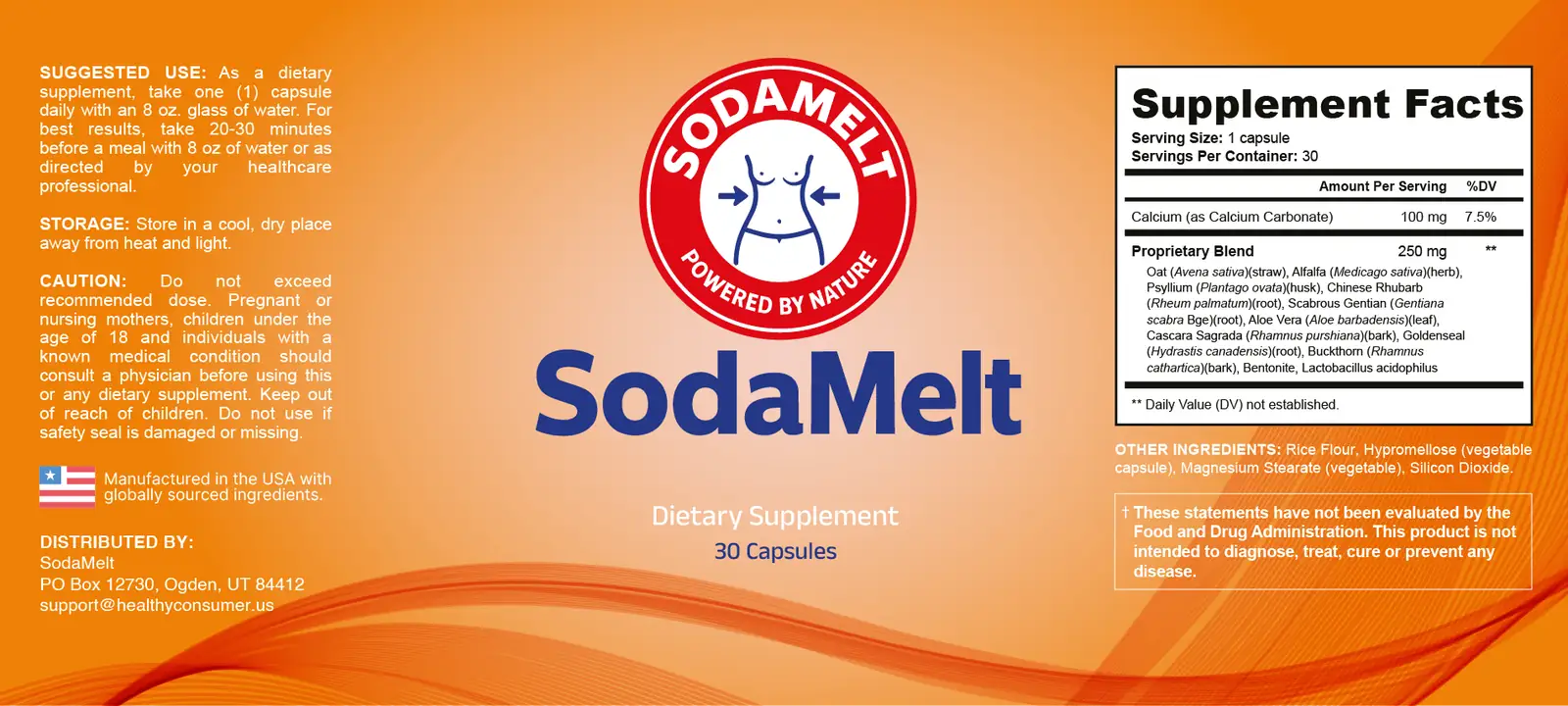
- On this panel psyllium is third of eleven inside a 250 mg blend, which is a fortieth of a trial dose before the split is even considered.
A fibre is not a drug, and the difference is the dose
Most things in a supplement capsule are potent in the technical sense: a small amount interacts with a receptor or an enzyme and produces an effect out of proportion to its weight. That is why milligrams are a sensible unit for them.
Psyllium does not work that way. It has no receptor, it is not metabolised into anything active, and it does not interact with an enzyme. It is a material that absorbs water, and what it does downstream follows from how much of it there is.
That distinction sounds academic and it is the single most practical thing on this page. A potent ingredient can be concentrated. A material working by bulk cannot, because concentrating bulk is a contradiction.
What the husk does when it meets water
The husk is the outer coating of the Plantago ovata seed and it is largely arabinoxylan, a polysaccharide that hydrates readily and holds water in a gel network. Reviews of fibre physiology describe how those physical properties drive the effects attributed to fibre (a review of how functional fibres actually work).
In the gut that gel does three things. It adds volume. It softens what is there. And because it is viscous rather than watery, it moves as a mass rather than dispersing.
All three are what physicists would call extensive properties. They scale with the quantity of material present, and none of them has a threshold you can sneak under.
| Property | What it depends on | Why that sets a minimum dose |
|---|---|---|
| Water held | The mass of husk present | A gram of husk holds a certain volume of water; half a gram holds half as much |
| Gel viscosity | Concentration of hydrated husk in the gut contents | Below a threshold concentration there is no gel, only wet powder |
| Stool bulk added | Total mass of hydrated material | Bulk is mass. There is no potent version of mass |
| Transit effect | The bulk and softness produced | Downstream of the two properties above, so it inherits their minimum |
| Bile acid binding | Surface and volume of gel formed | The lipid results track the gel, which tracks the dose |
Five properties, all of them extensive rather than potent: they scale with how much material is present rather than with how active it is.
Read down the right-hand column and the reason for the gram doses becomes mechanical rather than conventional. Nobody chose grams; the material did.
Where the gram figures come from
| Study type | Daily psyllium used | What it looked at |
|---|---|---|
| Updated meta-analysis of fibre in chronic constipation | More than 10 g | Stool frequency and consistency across randomised trials |
| Dose-response review | Graded amounts | How the effect grows with the amount given |
| Lipid meta-analysis | 10.2 g | LDL and total cholesterol |
| Head-to-head against an osmotic | Comparable gram doses | Whether a bulk fibre holds up against a prescription option |
| Trial in women | Gram doses over weeks | Symptoms and tolerability in a defined population |
Every figure in the middle column is in grams. No trial in this literature tested a milligram dose, because a milligram dose would not be expected to do anything.
The constipation figure is the one most often quoted. An updated systematic review and meta-analysis of fibre supplementation in chronic constipation found the benefit at doses above 10 g a day (a 2022 meta-analysis of fibre supplementation), and a separate dose-response review sets out how the effect grows as the amount rises (a dose-response meta-analysis).
The cholesterol literature lands in the same region. A meta-analysis of psyllium and lipids used 10.2 g a day (a meta-analysis of eight controlled trials), which is a close enough match to be reassuring rather than coincidental: both effects follow from the same gel.
Head-to-head work against an osmotic laxative put psyllium in the same conversation as prescription options rather than beneath them (a randomised comparison with polyethylene glycol), and trials in defined populations used the same order of magnitude (a randomised trial in constipated women).
Read the SodaMelt panel against these figures
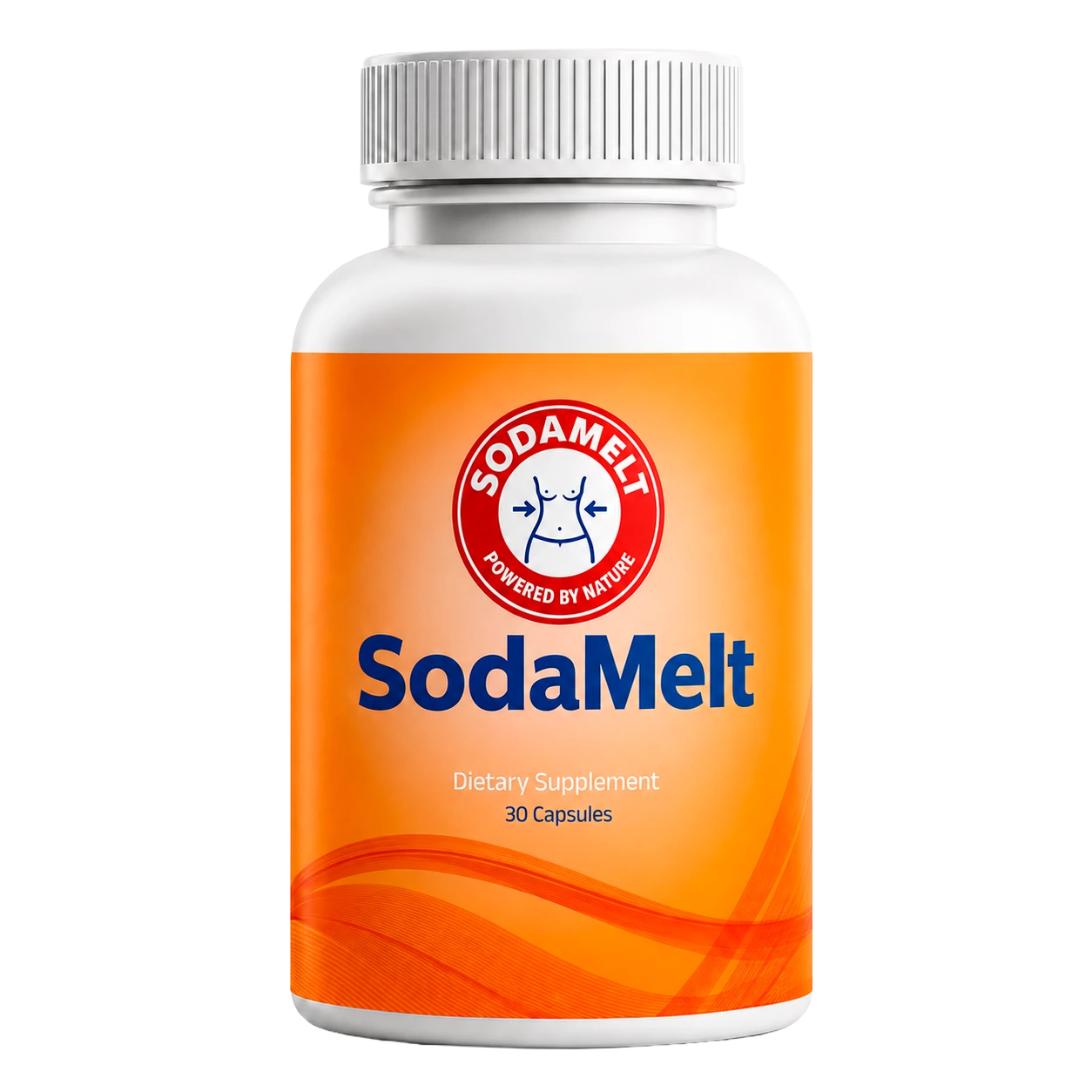
Psyllium sits third of eleven inside a 250 mg blend. The ingredients page prints every trial dose beside its label position, with each paper linked.
One bottle $89 · six bottles $294 · 60-day money-back guarantee
Order SodaMelt On The Official WebsiteOne capsule a day · 30 per bottle · lot SOD-26/MY-2226
Why there is no small effective dose
This is the section people arrive looking for, usually phrased as whether a smaller amount still does something proportionally smaller.
The answer is that it does not, and the reason is the viscosity threshold. Below a certain concentration of hydrated husk in the gut contents there is no gel at all, just wet powder dispersed in fluid. A gel is a network, and a network needs enough strands to form.
So the dose-response curve is not a straight line running down to zero. It flattens at the bottom, and a tenth of a working dose does considerably less than a tenth of the work.
- No extract concentrates psyllium, because there is nothing to concentrate; the husk is the active material
- No standardisation percentage applies, because the effect is not attributable to a marker compound
- No delivery technology changes the arithmetic, because the gel has to form in the gut regardless
- Nothing in the literature reports a milligram-scale result, because nobody has had a reason to test one
The water half of the instruction
Every fibre product tells you to take it with a full glass of water and most people read that as a swallowing instruction. It is not.
The water is the other half of the mechanism. Husk that does not hydrate does not gel, and a quantity of dry husk moving through a gut with insufficient fluid is doing the opposite of what it was taken for.
It is worth noting that this particular carton carries a water instruction of its own, and a specific one: one capsule with an 8 oz glass of water, 20 to 30 minutes before a meal. The reason is more likely to be the calcium carbonate, which needs stomach acid to dissolve, than the psyllium row. Either way, the instruction is worth following.
What a capsule can honestly carry
A large capsule of the kind used for supplements holds somewhere in the region of 500 to 800 mg of a light plant powder. To deliver 10 g of psyllium you would need something like fifteen of them, taken at once, three or four times a week at minimum.
That is why psyllium products that work are sold as powders in tubs with a scoop. The format is not a marketing decision; it is the only format the dose fits into.
On this label psyllium is third by weight inside a 250 mg blend. Even on the most generous plausible split it is a small fraction of a quarter of a gram, against a trial dose of more than ten grams. The gap is not close.
What that means for a blend measured in milligrams
A blend total of 250 mg is a twentieth of a single gram-scale serving before it is divided at all. Divided among eleven ingredients, with psyllium third in the order, the share available to the fibre row is smaller again and cannot be stated, because the split is not declared.
What can be stated is the direction. Whatever the split, the psyllium row is at least two orders of magnitude below the amounts the trials used, and no arrangement of the remaining ten ingredients changes that.
Where psyllium genuinely earns its reputation
None of the above is a criticism of psyllium, which is one of the better-evidenced things on any shelf in this aisle. The evidence is good, the mechanism is understood, and the trials are unglamorous and repeatable.
It is a criticism of the format. A psyllium row in a small blend borrows a reputation the amount cannot pay for, and it does so without saying anything untrue, which is what makes it hard to spot.
The useful takeaway is a question rather than a verdict. When a label names a fibre, look for the unit. If the figure is in grams, the row is doing work. If it is in milligrams, or inside a blend measured in milligrams, the row is a name rather than a dose.
References
- van der Schoot A, Drysdale C, Whelan K, et al. The Effect of Fiber Supplementation on Chronic Constipation in Adults: An Updated Systematic Review and Meta-Analysis of Randomized Controlled Trials. Am J Clin Nutr. 2022;116(4):953-969. PMID 35816465. https://pubmed.ncbi.nlm.nih.gov/35816465/
- Wei ZH, Wang H, Chen XY, et al. Time- and dose-dependent effect of psyllium on serum lipids in mild-to-moderate hypercholesterolemia: a meta-analysis of controlled clinical trials. Eur J Clin Nutr. 2009;63(7):821-7. PMID 18985059. https://pubmed.ncbi.nlm.nih.gov/18985059/
- McRorie JW Jr, McKeown NM. Understanding the Physics of Functional Fibers in the Gastrointestinal Tract: An Evidence-Based Approach to Resolving Enduring Misconceptions about Insoluble and Soluble Fiber. J Acad Nutr Diet. 2017;117(2):251-264. PMID 27863994. https://pubmed.ncbi.nlm.nih.gov/27863994/
- Anderson JW, Allgood LD, Lawrence A, et al. Cholesterol-lowering effects of psyllium intake adjunctive to diet therapy in men and women with hypercholesterolemia: meta-analysis of 8 controlled trials. Am J Clin Nutr. 2000;71(2):472-9. PMID 10648260. https://pubmed.ncbi.nlm.nih.gov/10648260/
- Wang HJ, Liang XM, Yu ZL, et al. A randomised, controlled comparison of low-dose polyethylene glycol 3350 plus electrolytes with ispaghula husk in the treatment of adults with chronic functional constipation. Drugs R D. 2005;6(4):221-5. PMID 15991881. https://pubmed.ncbi.nlm.nih.gov/15991881/
- Yang C, Liu S, Li H, et al. The effects of psyllium husk on gut microbiota composition and function in chronically constipated women of reproductive age using 16S rRNA gene sequencing analysis. Aging (Albany NY). 2021;13(11):15366-15383. PMID 34081625. https://pubmed.ncbi.nlm.nih.gov/34081625/