SodaMelt Official Website › Blog › Bentonite At Position Ten
Bentonite At Position Ten: What This Label Doesn’t Test For
Bentonite is the tenth of eleven names in the SodaMelt blend, one place above the probiotic at the bottom. Clay ingredients carry a specific, well-documented risk that has nothing to do with dose and everything to do with where the clay was dug. Here is what the research says about that risk, and what this particular label does and does not tell you about it.
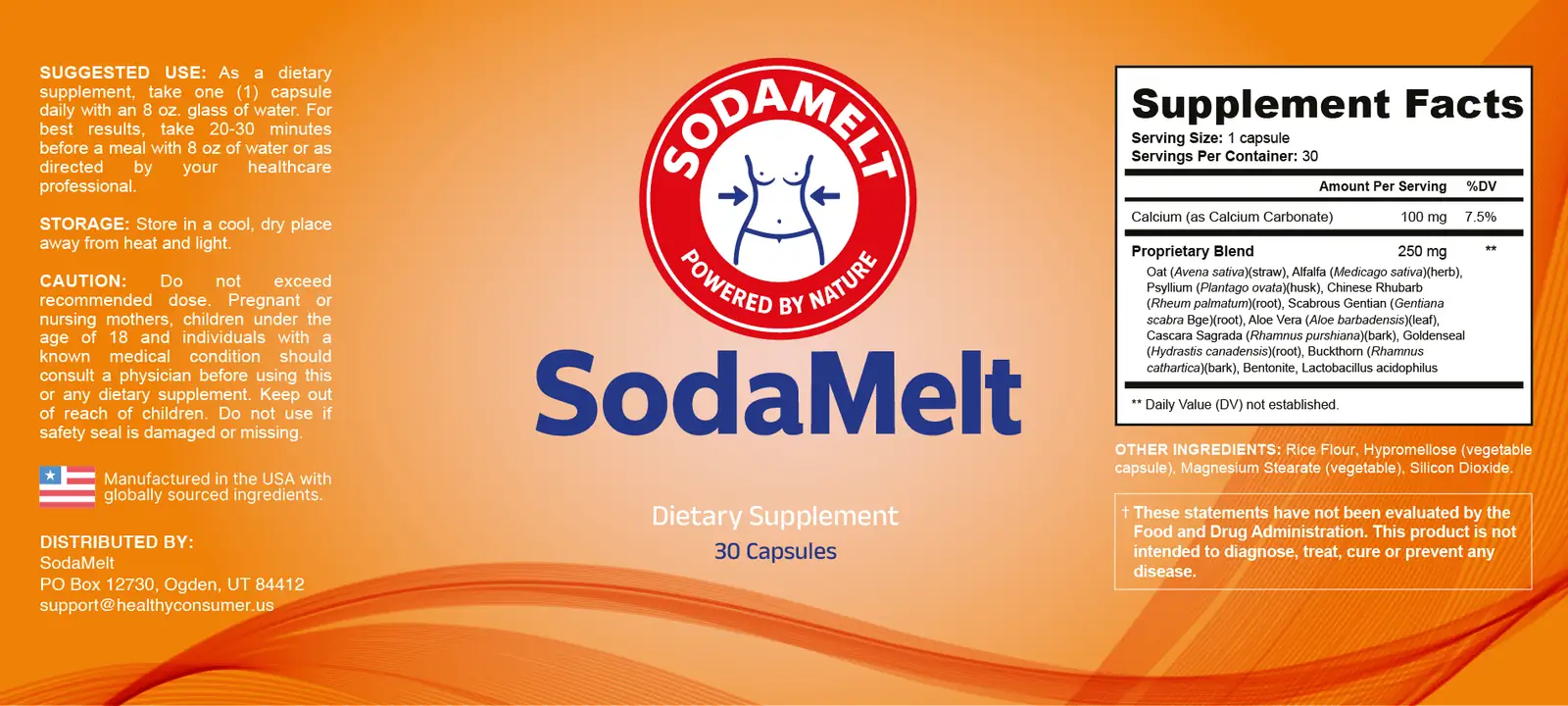
- Bentonite is a clay mineral, not a plant. On this label it sits at position ten of eleven, so by weight it is one of the smallest ingredients in an already small blend.
- Clay eaten as food or supplement carries a real, published risk of lead and cadmium contamination, because the metal comes from the deposit the clay was mined from, not from anything added to it.
- The published data behind that risk comes from people eating raw geophagic soil, which is not the same product as a processed, encapsulated bentonite in a capsule — the mechanism is the same, the specific numbers are not transferable.
- US dietary supplement rules do not require a manufacturer to test a finished bottle for heavy metals before selling it. Nothing on this label states a test result for lead, cadmium, arsenic or mercury.
- At position ten of a 250 mg blend, the amount of clay in one capsule is small in absolute terms, which lowers the stakes of contamination without eliminating the question a buyer might reasonably ask.
What bentonite is, and why a clay is in a digestion blend
Bentonite is not a herb, a root or a bark. It is a clay formed from weathered volcanic ash, made mostly of the mineral montmorillonite. Two broad varieties are sold as supplements: sodium bentonite, which swells heavily in water, and calcium bentonite, sometimes marketed as “calcium bentonite clay” or under trade names, which swells less. The label on this bottle does not say which variety was used, only the single word “Bentonite.”
Clays like this have a long history in traditional and folk medicine as a treatment for digestive upset, largely because their mineral platelets carry a negative surface charge and can bind positively charged molecules in the gut. That binding property is also the basis of most marketing claims about clay “detoxing” or “drawing out” substances, a claim this website is not able to verify or refute from the label alone, because the label prints no binding-capacity figure and no independent test result of any kind.
Position ten, and what that does to the amount
Under 21 CFR 101.36, everything inside a proprietary blend has to be listed in descending order of weight. On this label the order runs: oat straw, alfalfa herb, psyllium husk, Chinese rhubarb root, scabrous gentian root, aloe vera leaf, cascara sagrada bark, goldenseal root, buckthorn bark, bentonite, Lactobacillus acidophilus. Bentonite is second from the bottom, ahead of only the probiotic culture.
| Position | Ingredient | What that position by itself tells you |
|---|---|---|
| 1–3 | Oat straw, alfalfa, psyllium | Likely the heaviest of the eleven, though the split is not printed |
| 4, 6–7, 9 | Chinese rhubarb, aloe vera, cascara sagrada, buckthorn | The four anthranoid-bearing botanicals, covered on this site’s other posts |
| 5, 8 | Scabrous gentian, goldenseal | Middle of the order by weight |
| 10 | Bentonite | Near the bottom; the whole 250 mg blend cannot make this a large amount |
| 11 | Lactobacillus acidophilus | Last by weight and no colony count is declared |
The order is a legal requirement (21 CFR 101.36); the milligram split behind it is not disclosed, so exact amounts cannot be recovered from position alone.
Applied the same way this site’s ceiling-math piece on the whole blend applies it: if the 250 mg were split evenly across eleven names, each would get 22.7 mg. Nobody formulates that way, and a formulator loading weight toward the anthranoid rows at four, six, seven and nine would leave even less for position ten. Whatever the true split, bentonite in this capsule is a small quantity of clay, most plausibly in the single-digit milligrams.
The risk the research actually documents
The scientific literature on ingested clay is not about supplement capsules specifically. It is mostly about geophagy — the deliberate eating of soil or clay, a practice documented worldwide and studied most often in pregnant women, where cravings for clay or soil are relatively common. That research is still the most relevant published evidence available for what clay, as a category of material people put in their mouths, actually contains.
A 2020 analysis of twenty geophagic clays sold in open markets in southern Nigeria, intended for both local consumption and regional distribution, measured lead and cadmium in every sample. Lead exceeded the WHO/FAO maximum permissible limit in all twenty samples; sixteen percent also exceeded the cadmium limit, and the estimated daily lead intake from eating the clay exceeded the WHO/FAO provisional tolerable weekly intake for both children and adults (Orisakwe et al., 2020). The authors’ framing is directly relevant here: they describe these clays as being “implicitly or explicitly marketed as dietary supplements” and argue that this marketing role is exactly why finished-product testing and labelling matter.
A separate clinical review of severe gestational lead poisoning found that of fifteen women identified with blood lead levels at or above 45 µg/dL, seventy percent had developed the poisoning from ingesting soil, clay or pottery, referred to in the paper by the Spanish word “tierra” (Shannon, 2003). That paper is two decades old and describes a specific population, but the underlying mechanism it documents — lead entering the body because it was already present in clay that someone ate — is exactly the mechanism a clay ingredient in a capsule would share if the source deposit carried the same contamination.
Neither paper tested SodaMelt, and neither paper tested any encapsulated, food-grade bentonite sold as a dietary supplement ingredient in the United States. They establish that clay as a category of material carries a real, geology-driven contamination risk that varies by deposit, not that any particular product is or is not affected.
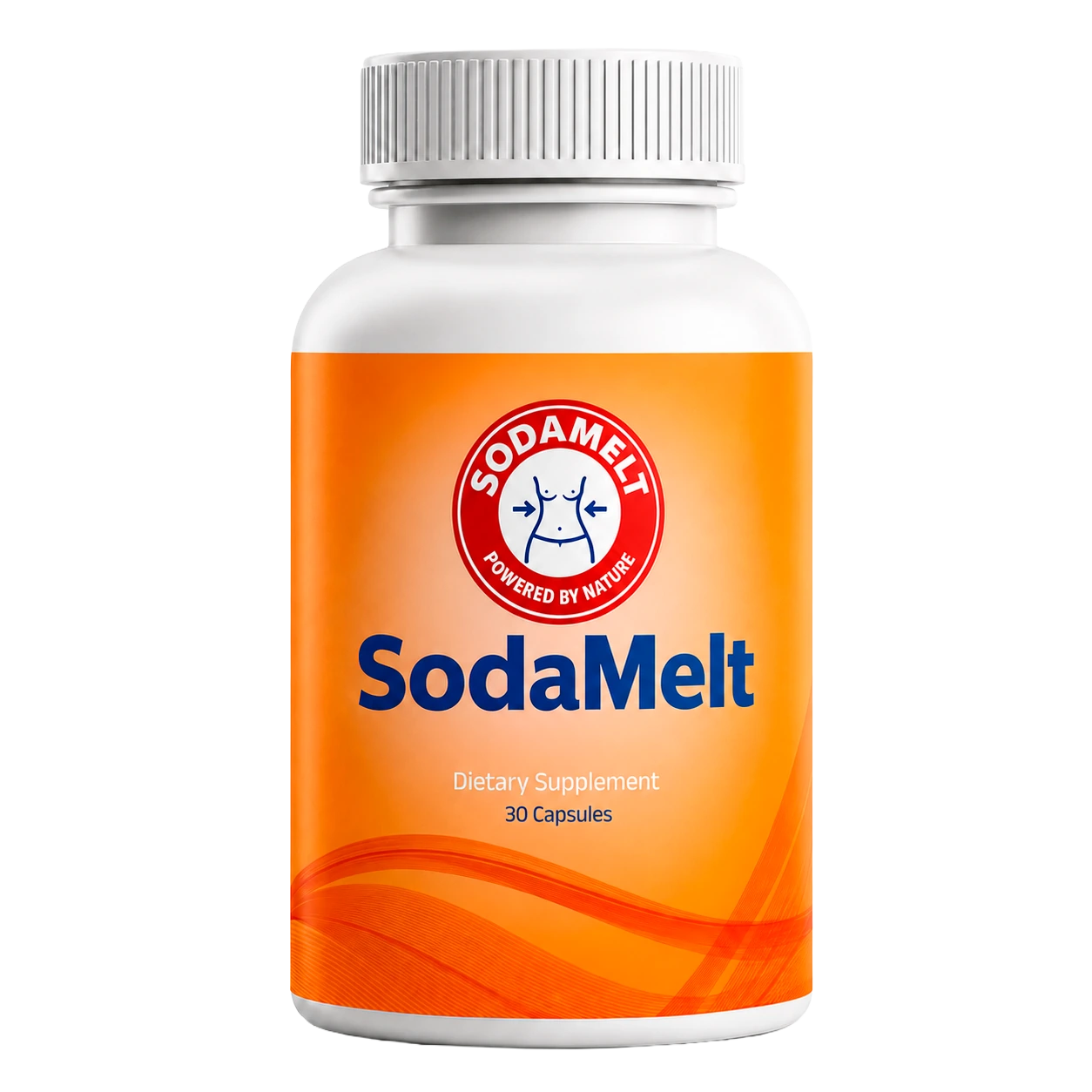
See the SodaMelt panel transcribed in full
Eleven botanical names, a clay, a culture and one declared mineral, read off the carton rather than paraphrased. The window is 60 days from the purchase date.
One bottle $89 · six bottles $294 · 60-day money-back guarantee
Order SodaMelt On The Official WebsiteOne capsule a day · 30 per bottle · lot SOD-26/MY-2226
Where the published data and this product stop lining up
Three things separate the geophagy literature from a bentonite row on a US supplement label, and a fair reading has to hold all three at once.
- Quantity. The women in the geophagy studies were eating whole lumps of raw soil or clay, often tens of grams at a time, repeatedly. A capsule holding a single-digit milligram share of a 250 mg blend is a much smaller exposure, even before anything else is considered.
- Processing. Food-grade bentonite sold to US supplement manufacturers is typically mined, dried and milled under different controls than soil dug up and eaten directly from the ground. Processing does not guarantee a lower metal content — metal that is part of the mineral itself is not removed by drying or milling — but it is a different supply chain from a roadside clay market.
- Source deposit. Contamination in these studies tracks the geology of a specific mine or outcrop, not the word “bentonite” itself. A clay from one deposit can test clean while a clay from another, chemically similar deposit does not. The label does not name a mine, a country of origin for this ingredient, or a testing standard, so a reader has no way to know which case applies here.
None of that proves this ingredient is a problem. It also means none of it proves the opposite. The honest position, given what is printed, is that the question is a real one and the label does not answer it either way.
What testing would need to show
A heavy-metal question like this one is answered by a specific, publishable number, not by a general assurance. For bentonite in a finished supplement, the information that would actually close the gap is:
- A certificate of analysis for lead, cadmium, arsenic and mercury on the finished capsule batch, not just the raw clay input
- The result expressed against a recognised limit, such as USP <2232> elemental impurity limits for dietary supplements, so a reader can see the margin rather than a pass/fail label
- The mine or region the bentonite was sourced from, since that is the variable the published literature says actually drives the risk
- Whether the material is designated food-grade or pharmaceutical-grade bentonite, which carries different purification and testing expectations than a cosmetic or industrial grade
The batch-verify page on this site lists the lot and certificate references printed on this product’s own paperwork. As explained there, those are filing references, not laboratory results, and they do not include an elemental-impurity panel.
What the rules require, and what they don’t
In the United States, dietary supplements are regulated under DSHEA as a category of food, not as drugs. Current Good Manufacturing Practice rules for supplements (21 CFR Part 111) require a manufacturer to verify the identity of each ingredient and to have specifications the finished product is supposed to meet, but they do not require a specific heavy-metal assay to be run on every batch or published for buyers to see. A manufacturer can meet its GMP obligations without a lead, cadmium, arsenic or mercury figure ever appearing on a label or a public certificate.
That is not a claim that this manufacturer has skipped testing internally — there is no way to know that from outside the company. It is a claim about what the rules guarantee a buyer will get to see, which on this point is nothing. For an ingredient that is a mined clay rather than a cultivated plant, that gap matters more than it would for an ingredient whose contamination pathway is agricultural rather than geological.
Bentonite’s position on this label keeps the exposure small in absolute terms. Its identity as a mined clay is exactly the category of ingredient the published literature says to ask a sourcing question about. This page cannot answer that question for you; it can only show you what to ask for.
References
- Orisakwe OE, Udowelle NA, Azuonwu O, Nkeiruka IZ, Nkereuwem UA, Frazzoli C. Cadmium and lead in geophagic clay consumed in Southern Nigeria: health risk from such traditional nutraceutical. Environ Geochem Health. 2020;42(11):3865-3875. PMID 32607698. https://pubmed.ncbi.nlm.nih.gov/32607698/
- Shannon M. Severe lead poisoning in pregnancy. Ambul Pediatr. 2003;3(1):37-9. PMID 12540252. https://pubmed.ncbi.nlm.nih.gov/12540252/
- U.S. Food and Drug Administration. Dietary Supplement Current Good Manufacturing Practices (CGMPs) and Interim Final Rule (IFR) Facts, 21 CFR Part 111. Describes identity testing and specification requirements for dietary supplement manufacturers. https://www.fda.gov/food/dietary-supplements-guidance-documents-regulatory-information/current-good-manufacturing-practices-cgmps-dietary-supplements