When Constipation Is A Question For A Doctor, Not A Supplement: Alarm Features And Who Should Not Self-Treat
A capsule sold for a slow bowel can do one thing: help stool move. It cannot tell you why the bowel is slow. Most of the time the reason is ordinary and harmless, but the guidelines that describe constipation keep a short list of signs that mean the reason should be looked for rather than treated over. This article sets that list beside the SodaMelt panel, whose stimulant plants can produce a bowel movement whatever the cause, which is exactly why the list matters.

- Published guidance lists alarm features for constipation: unintentional weight loss, blood in the stool, anaemia or iron deficiency, a family history of colorectal cancer, and new symptoms in middle age, with the age line set at 45 in one consensus and 50 in another source.
- The list is a filter, not a verdict. A leading review says these warning signs have low predictive values in chronic constipation, and in a 786-person colonoscopy series for constipation alone, no cancers were found.
- In a primary-care study of people over 40, the predictive value for colorectal cancer was 2.4 percent for rectal bleeding, 1.2 percent for weight loss, 1.1 percent for abdominal pain and 0.42 percent for constipation on its own.
- A capsule that produces a bowel movement touches none of those signs. It can make the main complaint look managed, and that is the risk: it can postpone the question.
- Four of the eleven blend entries are anthranoid stimulants. In 2002 the FDA ruled that aloe and cascara sagrada are not generally recognised as safe and effective as over-the-counter laxative drug ingredients.
- The carton's own caution asks anyone with a known medical condition to consult a physician first. It names no symptom that should make you stop.
What the capsule can and cannot see
The SodaMelt blend has eleven entries. Four of them, Chinese rhubarb root, aloe vera leaf, cascara sagrada bark and buckthorn bark, come from the anthranoid family, which is the group of plants whose compounds work as stimulant laxatives. The article on how long a stimulant laxative is meant to be taken covers how they act and why duration is the usual question. The point here is a different and simpler one. A stimulant acts on the symptom, which is stool not moving. It has no way of acting on the reason.
The reasons are many. A leading 2020 review of chronic constipation sorts them into primary causes, meaning normal-transit, slow-transit and defecatory disorders, and secondary ones. The secondary list is long: medications, especially opioids; mechanical obstruction, including colon cancer, strictures, a large rectocele, megacolon and anal fissure; metabolic conditions such as diabetes, hypothyroidism, high calcium or low potassium; muscle and nerve disorders such as scleroderma, Parkinson's disease and multiple sclerosis; and depression, among others (the 2020 review of chronic constipation). Nearly all of these give the same symptom. Which one you have is a question no laxative, herbal or otherwise, can answer.
The same body of guidance is blunt about the limits of symptoms alone. A 2021 review states that symptoms of chronic constipation by themselves do not accurately predict the underlying pathophysiology or the response to treatment (the 2021 diagnostic review). Two people with identical complaints can have quite different problems, and only a history, an examination and sometimes a test can separate them.
The label's own caution
The SodaMelt carton has a caution paragraph, and the relevant part of it reads: individuals with a known medical condition should consult a physician before using this or any dietary supplement. The suggested use adds, or as directed by your healthcare professional. Those are the label's own words, and it is fair to give them credit. They point the right way.
What they do not do is name a symptom. The carton does not say which signs should make you stop the capsule or see someone, and it does not say how long is too long. A reader who has never heard of alarm features would not learn them here, and that is common on supplement cartons, not special to this one. The rest of this article fills in the missing list from published sources, so that the phrase known medical condition has something concrete behind it. The label's other cautions, about pregnancy, nursing and age, are not the subject of this article and are not repeated here; the side effects page is the place for the rest of the safety picture.
The alarm features, and where each comes from
Different bodies word the list differently, and the thresholds vary, so the table below shows which source says what. None of the sources is an official label rule. They are review articles and a national consensus, and they are used here because they are published and open to checking.
| Feature | What the sources say | What a stimulant capsule does about it |
|---|---|---|
| Unintentional weight loss | Warning sign in the 2020 review, quantified there as more than 10 percent of body weight; the 2024 consensus says more than 10 percent in three months | Nothing. It is not a bowel symptom |
| Blood in the stool or rectal bleeding | Listed in the 2020 review, the 2021 review and the 2024 consensus | Nothing; and bleeding may wrongly be put down to straining |
| Anaemia or iron deficiency | Listed in all three; the consensus adds a positive faecal occult blood test | Nothing. It shows up in a blood count, not in the toilet |
| Family history of colorectal cancer | Listed in the 2020 and 2021 reviews; the 2020 review adds polyposis syndromes and the consensus adds a family history of inflammatory bowel disease | Nothing |
| New symptoms in middle or later life | The consensus lists new-onset symptoms after age 45; a colonoscopy study concluded that colonoscopy for constipation alone may only be warranted over 50 | Nothing; and it removes the baseline a clinician wants to see |
| Persistent unexplained change in bowel habit, a lump, rectal tenesmus, cachexia | Each is on the consensus's list of reasons to refer | Nothing; it may blur how the habit has actually changed |
| No response to standard measures, or getting worse | The consensus lists inadequate response to empiric treatment and worsening despite continuous treatment; the 2020 review recommends anorectal testing for people who do not respond | Nothing; another product is not the next step |
| Constipation with abdominal pain | Under Rome IV, recurrent pain linked with defecation or a stool change makes it irritable bowel syndrome with constipation, a different diagnosis | Nothing; and pain is one of the features that has predictive value for serious disease |
Sources: the 2020 review of chronic constipation, the 2021 diagnostic review, a 2024 consensus on adult constipation, and two colonoscopy studies, all cited below. The age line differs between them, which is why both 45 and 50 appear.
Two rows deserve a comment. The age threshold is a good example of how guidance is not identical everywhere: one consensus lists new-onset symptoms after 45 alongside screening colonoscopy over 45, while a study of colonoscopy for constipation concluded that testing may only be warranted over 50 (the 2024 consensus, the colonoscopy yield study). The point is not the exact year. It is that symptoms which begin for the first time later in life are treated differently from a lifelong sluggish bowel.
The row on pain rests on how Rome IV is built. As the companion article, how constipation is measured, explains, functional constipation requires that the criteria for irritable bowel syndrome with constipation are not fully met, and that syndrome is defined by recurrent abdominal pain. So constipation with pain is a different question from constipation without it, and it is answered by a clinician.
How rare the serious cause is, and why the list exists anyway
Before going further, some proportion. Reading a list of alarm features can make a person with ordinary constipation fear the worst, and the evidence does not support that.
The strongest reassurance is that the same review that lists the warning signs says they have low predictive values in patients with chronic constipation, and that colonoscopy is only needed for people with alarm symptoms or as age-appropriate screening (the 2020 review). The numbers behind that are modest.
- A primary-care case-control study in Exeter, Devon, compared 349 patients with colorectal cancer, all aged 40 or over, with 1,744 matched controls, and calculated the positive predictive value of each feature in the two years before diagnosis. The values were 2.4 percent for rectal bleeding, 1.2 percent for weight loss, 1.1 percent for abdominal pain, 2.3 percent for haemoglobin below 10, and 7.1 percent for a positive faecal occult blood test, against 0.42 percent for constipation alone (the Exeter study).
- A colonoscopy series of 786 patients whose only indication was constipation, with mean age 57, found polyps in 5.5 percent, adenomas in 2.4 percent and no cancers at all (the colonoscopy yield study).
- A meta-analysis of 28 studies found that where constipation was the primary reason for colonoscopy, the prevalence of colorectal cancer was lower, not higher (odds ratio 0.56). Case-control studies showed a raised association, which the authors thought could reflect recall bias, and the prospective cross-sectional and cohort studies showed no increase (the meta-analysis of constipation and colorectal cancer).
- A larger 2024 analysis of 5,478 constipated patients against 4,100 average-risk controls found no increased risk of cancer or polyps in any age group, with a possible signal in people over 80 that did not reach significance. It also found something else worth knowing: younger constipated patients had a higher rate of inflammatory bowel disease, 1.7 percent against 0.1 percent (the age-based colonoscopy analysis).
Read together, those results say two things at once. Most people with constipation do not have a dangerous cause. And the handful who do are not distinguishable by the constipation itself. What separates them is the presence of the other features, and each of those has a predictive value that is low for any one person but high enough across a population to justify a look. That is the whole logic of an alarm feature. It is a filter for deciding who needs a test, not a diagnosis.
An objective test now helps with that filtering in some health systems. A joint British and Irish guideline recommends faecal immunochemical testing in primary care for people with symptoms of suspected colorectal cancer, describing it as offering a vastly superior positive predictive value to symptoms alone and as identifying a truly low-risk group (the FIT guideline). Whether such a test is appropriate for you is a clinician's decision, and mentioning it here is only to show that the answer to a worrying symptom is increasingly a simple test rather than a leap to the worst.
How a capsule can mask a symptom
This section is reasoning, not a research finding. None of the studies cited here measured whether taking a laxative delays a diagnosis, and this article will not pretend otherwise. It is the reasoning that follows from what the studies do show.
The first way a capsule can mislead is by improving the wrong thing. If the complaint is that stool is not moving, and a stimulant makes it move, the complaint improves. Weight loss, bleeding and anaemia are untouched, and they are the signs that carry the information. But the person who feels their main problem is being handled has one less reason to mention the others.
The second is by erasing the baseline. Several of the alarm features are about change: a persistent unexplained change in bowel habit, a worsening despite treatment, new symptoms after a certain age. A clinician judges change against how the bowel behaved before. A person on a daily stimulant has a bowel whose pattern is being set by the stimulant. Rome IV builds this in, as described in the article on how constipation is measured, by counting only spontaneous movements and by assessing bowel-habit subtypes off medication. The 2020 review makes the practical corollary explicit: a medication and supplement review is part of the assessment.
The third is by supplying an innocent explanation. Blood in the stool, or a change in what the stool looks like, can be put down to straining or to the capsule, and the explanation seems reasonable. It may even be right. The point is that the person has accepted an explanation without an examination, and the guidelines list bleeding as a reason for an examination.
None of that means anyone who takes a stimulant has a hidden cancer. It means the capsule offers reassurance it has no basis to give.
Pain, obstruction and the bulking row
The second question worth thinking about is what happens when the cause is a blockage. The 2020 review lists mechanical obstruction, which includes colon cancer, external compression by a malignancy, strictures and megacolon, among the causes of constipation, and notes that these are often associated with alarm features or abnormal tests. A stimulant works by making the colon contract and by reducing water absorption. Nothing in the abstracts checked for this article quantifies what that does against a true obstruction, so the article states the logic and stops there: an obstruction is a reason for urgent evaluation, and anything that makes the bowel work harder against a blockage is the wrong response to it.
The bulking row, psyllium, brings a documented version of a related problem. In one case report, a 21-year-old man came to an emergency department with five days of lower abdominal pain and constipation and was sent home on psyllium. Two days later he returned with worse abdominal distension and no stool. He was diagnosed with incomplete intestinal obstruction from psyllium husks taken without enough fluid, and was treated conservatively. The authors noted that psyllium has a reputation as a safe laxative, that similar cases exist including esophageal obstruction in elderly patients, and that it can worsen constipation if taken without adequate fluids (the intestinal obstruction case report). A second report describes a 76-year-old man with Parkinson's disease who developed severe difficulty swallowing about ten hours after taking psyllium seed husk powder and was found to have an esophageal bezoar that had to be removed endoscopically. The authors called for attention to bulk laxatives and for an appropriate specified regimen when they are sold as dietary supplements (the esophageal obstruction case report).
Keep this in scale. Psyllium is third of eleven on this panel, and the blend is printed in descending order of weight, so psyllium can be no more than a third of 250 mg, roughly 83 mg at the very most. Both reports concern husk in granular or powder form, not a capsule holding a small fraction of the blend. The article on psyllium dosing explains why a capsule cannot hold a bulking dose. The reports are not evidence that this capsule causes obstruction. They are the reason the label asks for an 8 oz glass of water, and they carry two plain lessons. Abdominal pain and swelling with constipation are a reason to seek care, not to add something. And a sudden severe pain, marked swelling or vomiting, with no stool or wind passing, is an emergency, not a question for a shopping page.
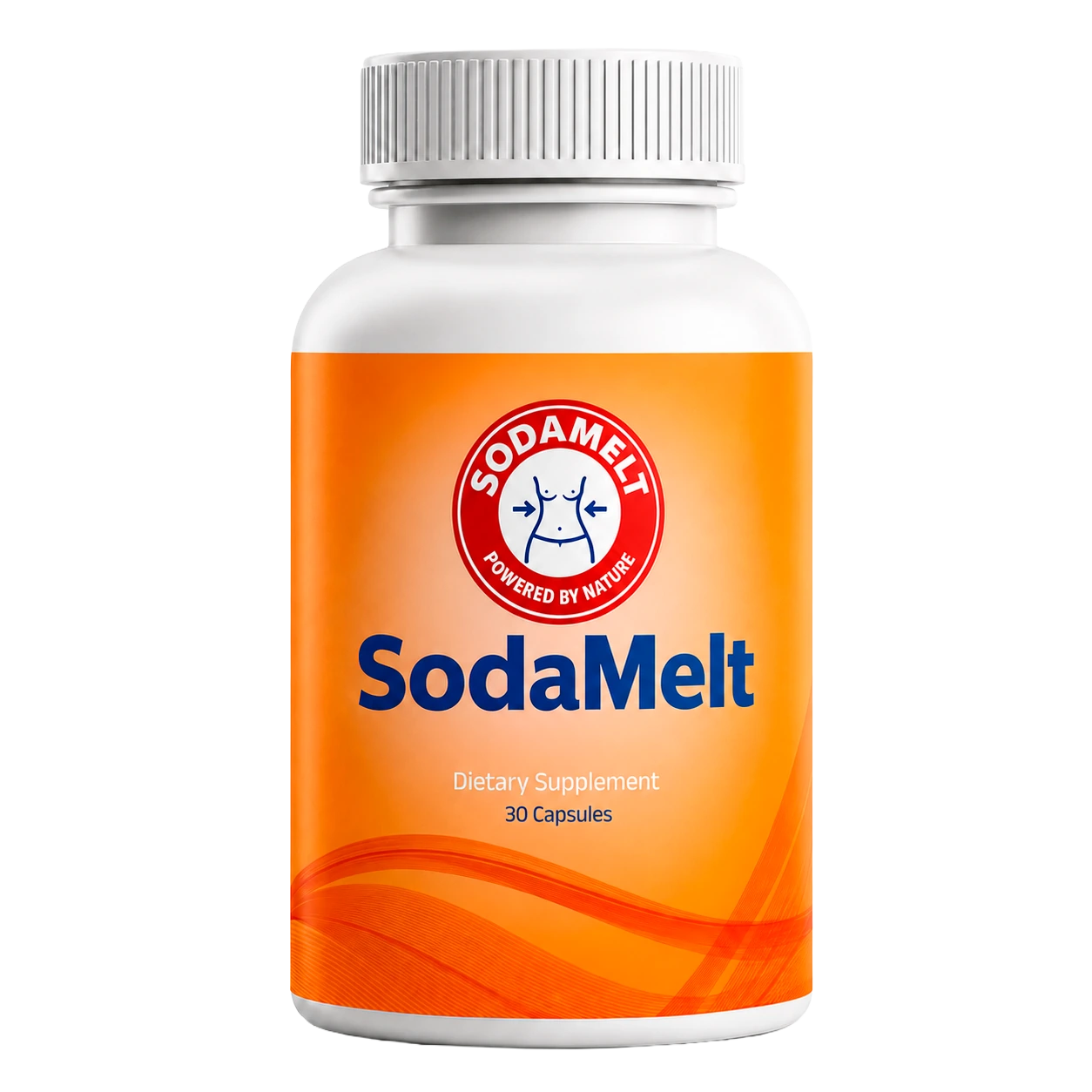
Check the list, then decide about SodaMelt
One capsule a day with an 8 oz glass of water. If any alarm feature in this article applies to you, speak to a clinician before you order.
Order SodaMeltThe four anthranoid rows: what has been said about them
The four rows share a chemical family, and there are two distinct strands of published comment on it. Neither is about duration, which the duration article covers.
The regulatory strand. In May 2002 the FDA issued a final rule stating that the stimulant laxative ingredients aloe, including aloe extract and aloe flower extract, and cascara sagrada, including casanthranol and the bark, extract and fluidextract forms, are not generally recognised as safe and effective, or are misbranded, in over-the-counter drug products (the 2002 FDA final rule). The abstract states the finding and not the reasons, and this article does not guess at them. It also concerns over-the-counter drug products, and SodaMelt is sold as a dietary supplement, which is a different regulatory category. That is a description of two labelling regimes, and not a verdict on the product. It is still a fact a buyer is entitled to know: two of the four plants on this panel are ones the agency ruled out as OTC laxative ingredients.
The safety-assessment strand. In 2018 the European Food Safety Authority's Panel on Food Additives and Nutrient Sources added to Food assessed the safety of hydroxyanthracene derivatives, the chemical class the four rows share, which occur naturally in various botanicals and are used in food to improve bowel function. It noted evidence of in vitro genotoxicity for emodin, aloe-emodin and the related substance danthron, genotoxicity in vivo for aloe-emodin, and carcinogenicity for whole-leaf aloe extract and danthron. It also noted epidemiological data suggesting an increased risk of colorectal cancer with laxative use in general. It concluded that hydroxyanthracene derivatives should be considered genotoxic and carcinogenic unless there are specific data to the contrary, as there are for rhein, that there is a safety concern for extracts containing them, although uncertainty persists, and that it could not advise a daily intake without concern (the EFSA opinion).
That is not the last word, and honesty requires the other side. A 2022 systematic review of anthraquinone laxatives and colorectal cancer pooled five studies and found an odds ratio of 1.41 with a confidence interval of 0.94 to 2.11. That is a trend, not a statistically significant result, and the authors concluded that it was not possible to link the laxatives with colorectal cancer, while calling for better studies (the anthraquinone meta-analysis). So the position is genuinely unsettled: a regulator's panel unable to name a safe intake, and a meta-analysis unable to confirm the feared link.
The aloe article explains why the leaf of that plant is a different material from the gel. For this article the narrower point is enough. Uncertainty about the class is one more reason not to use a product from it to smooth over a symptom that has not been explained.
Who should not self-treat: a reading of the guidance
This is a reading of published guidance, not a list of official contraindications for this product. The label states none beyond the caution quoted above, and nothing here replaces advice from someone who has examined you. With that said, the sources above point to a fairly clear set of people for whom the first step is a clinician, not a capsule:
- Anyone with an alarm feature: blood in the stool, unintended weight loss, anaemia or iron deficiency, a persistent unexplained change in bowel habit, a lump, or a positive stool blood test.
- Anyone with a family history of colorectal cancer, polyposis or inflammatory bowel disease.
- Anyone whose symptoms are new in middle or later life, with the line at 45 or 50 depending on the source.
- Anyone whose constipation comes with pain or swelling, which changes the diagnosis and can signal obstruction.
- Anyone who has already tried standard measures and not improved, or who is getting worse. The guidance treats that as a reason to look further, not to try the next product.
- Anyone with a known medical condition, which is the label's own wording, including conditions that themselves cause constipation, such as diabetes, an underactive thyroid or Parkinson's disease, and bowel disease.
- Anyone taking a medicine that can cause constipation, above all opioids and anticholinergics, where the guidance says to review the medication first (the 2021 diagnostic review).
It is a long list, and the length is the point: the honest customer for a stimulant capsule is a person whose constipation is occasional, recent, painless, unaccompanied by any of the signs above and already reviewed for the ordinary causes. For that person the 2023 guideline article sets out what the specialist societies actually recommend, and a short course of a stimulant sits comfortably inside ordinary practice.
What to bring to an appointment
If any of the above applies, the most useful thing you can do is arrive prepared. A short list is enough:
- when the symptoms started and how they have changed, in your own words and with dates;
- a bowel diary of a week or two, using the fields in the article on measurement: the day, the Bristol type, whether it felt complete, and whether you took anything;
- any change in weight you did not intend, any blood, and any pain or swelling;
- your family history of bowel cancer, polyps or inflammatory bowel disease;
- every medicine and supplement you take, with the carton or a photograph of the panel, since the 2020 review lists a medication and supplement review as part of the assessment.
None of this is a reason to panic. Constipation is very common and very rarely dangerous, and every study in this article says so. It is a reason to know where the line is, so that a capsule sold for a slow bowel stays a small, optional thing and never becomes the reason a real question goes unasked. The Supplement Facts page and the ingredients page show exactly what is in the capsule, so that whoever you speak to can judge for themselves.
References
- Bharucha AE, Lacy BE. Mechanisms, Evaluation, and Management of Chronic Constipation. Gastroenterology. 2020;158(5):1232-1249.e3. PMID 31945360. https://pubmed.ncbi.nlm.nih.gov/31945360/
- Sharma A, Rao SSC, Kearns K, Orleck KD, Waldman SA. Review article: diagnosis, management and patient perspectives of the spectrum of constipation disorders. Aliment Pharmacol Ther. 2021;53(12):1250-1267. PMID 33909919. https://pubmed.ncbi.nlm.nih.gov/33909919/
- Abbasi A, Emmanuel AV, Tayyab GUN, Shafique K, Kamani L, Nasir MB, et al. Consensus Guidelines on Constipation in Adults in Pakistan. Pak J Med Sci. 2024;40(11):2763-2768. PMID 39634870. https://pubmed.ncbi.nlm.nih.gov/39634870/
- Hamilton W, Round A, Sharp D, Peters TJ. Clinical features of colorectal cancer before diagnosis: a population-based case-control study. Br J Cancer. 2005;93(4):399-405. PMID 16106247. https://pubmed.ncbi.nlm.nih.gov/16106247/
- Obusez EC, Lian L, Kariv R, Burke CA, Shen B. Diagnostic yield of colonoscopy for constipation as the sole indication. Colorectal Dis. 2012;14(5):585-91. PMID 21689337. https://pubmed.ncbi.nlm.nih.gov/21689337/
- Power AM, Talley NJ, Ford AC. Association between constipation and colorectal cancer: systematic review and meta-analysis of observational studies. Am J Gastroenterol. 2013;108(6):894-903; quiz 904. PMID 23481143. https://pubmed.ncbi.nlm.nih.gov/23481143/
- Abu Baker F, Mari A, Taher R, Nicola D, Gal O, Zeina AR. The Yield of Colonoscopy in the Evaluation of Constipation: An Age-Based Analysis of Outcome. J Clin Med. 2024;13(10). PMID 38792451. https://pubmed.ncbi.nlm.nih.gov/38792451/
- Monahan KJ, Davies MM, Abulafi M, Banerjea A, Nicholson BD, Arasaradnam R, et al. Faecal immunochemical testing (FIT) in patients with signs or symptoms of suspected colorectal cancer (CRC): a joint guideline from the Association of Coloproctology of Great Britain and Ireland (ACPGBI) and the British Society of Gastroenterology (BSG). Gut. 2022;71(10):1939-62. PMID 35820780. https://pubmed.ncbi.nlm.nih.gov/35820780/
- Hefny AF, Ayad AZ, Matev N, Bashir MO. Intestinal obstruction caused by a laxative drug (Psyllium): A case report and review of the literature. Int J Surg Case Rep. 2018;52:59-62. PMID 30321826. https://pubmed.ncbi.nlm.nih.gov/30321826/
- Shin S, Kim JH, Mun YH, Chung HS. Acute esophageal obstruction after ingestion of psyllium seed husk powder: A case report. World J Clin Cases. 2022;10(7):2336-2340. PMID 35321163. https://pubmed.ncbi.nlm.nih.gov/35321163/
- Food and Drug Administration, HHS. Status of certain additional over-the-counter drug category II and III active ingredients. Final rule. Fed Regist. 2002;67(90):31125-7. PMID 12001972. https://pubmed.ncbi.nlm.nih.gov/12001972/
- Younes M, Aggett P, Aguilar F, Crebelli R, Filipič M, Frutos MJ, et al. Safety of hydroxyanthracene derivatives for use in food. EFSA J. 2018;16(1):e05090. PMID 32625659. https://pubmed.ncbi.nlm.nih.gov/32625659/
- Lombardi N, Crescioli G, Maggini V, Bellezza R, Landi I, Bettiol A, et al. Anthraquinone laxatives use and colorectal cancer: A systematic review and meta-analysis of observational studies. Phytother Res. 2022;36(3):1093-1102. PMID 35040201. https://pubmed.ncbi.nlm.nih.gov/35040201/